“If God made an immovable rock would He be able to move it?”
We all knew someone who asked these types of questions. That one boy who sat in the corner and smiled proudly after baffling his fellow middle schoolers.
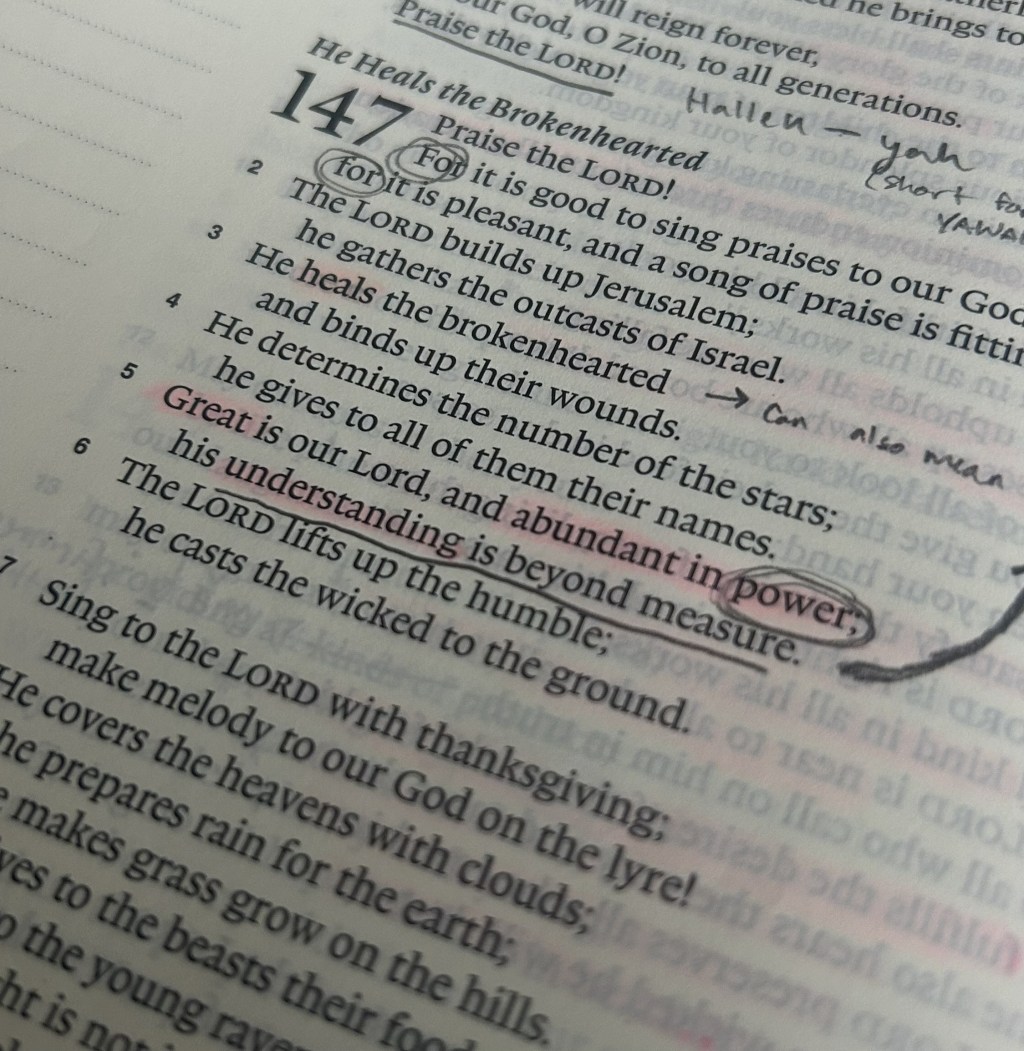
The question hits on how powerful God is, or His omnipotence. Omnipotence literally means “all-powerful,” and it greatly connects with God’s sovereignty. But instead of waving off omnipotence because you feel you’ve heard it before, let’s dive deeper into this trait of God.
God’s Power
Throughout the Bible, we see God’s power on display. In Job 42:2, we see that God’s plans can’t be thwarted. Authority figures fall under His power as we can see in the countless times He has wielded governments for His plans (Luke 2:1-6, Daniel 2:21). Even more, any power the president, the senate, the king or queen, or any governing authority has is from God and no one else (John 19:11). No work of their own gives them power unless granted by God.
Creation itself is a show of His power. Such power that a simple word creates (Genesis 1:3) and that life is sustained by His thoughts (Colossians 1:17, Hebrews 1:3, Nehemiah 9:6). Greater than any wizard we can imagine, God does not simply possess great power but He is all-powerful.
When He speaks, everything obeys (Isaiah 55:11). What He commands comes to pass (Lamentations 3:37-38). Because He is not bound by location or time, He can exercise this power anytime and anywhere. Because He is also not bound by physical weakness, He never sleeps, He never grows weary, and His mind never wanders.
Nothing is too hard for God (Genesis 18:14). The thunder of His power who can understand (Job 26:14)?
Even with all this power, we still have the question that the immovable rock highlights – is there anything that’s impossible for God? The answer is yes.
Power Yielded
Have you ever met someone who is very particular about things? I believe we all have aspects of that. One such example I can think of is how my brother greatly dislikes when you leave time on the microwave. You know when you heat something up in a microwave but then open the door too quickly? The time left remains there. And my brother hates that, so he always clears it off. He could leave it on there, but it would be against his nature.
In a much grander way, this is why God cannot lie (Numbers 23:19, Titus 1:2, Hebrews 6:18), tempt, or be tempted (James 1:13). He cannot go against His perfectly good and holy nature (2 Timothy 2:13).
A great example of this is found in Mark 6,
“And on the Sabbath He began to teach in the synagogue,
and many who heard Him were astonished, saying, ‘Where
did this man get these things? What is the wisdom given to Him?
How are such mighty works done by his hands? Is not this the carpenter,
the son of Mary and brother of James and Joses and Judas and Simon?
And are not His sisters here with us?’ And they took offense at Him.
And Jesus said to them, ‘A prophet is not without honor, except
in His hometown and among His relatives and in His own
household.’ And He could do no mighty work there except that
He laid His hands on a few sick people and healed them.”
(Mark 6:2-5)
Jesus could not do miracles at His hometown. Really? He couldn’t? He couldn’t because it would be against His nature. In verse 6, we see Jesus “marvel at their unbelief.” Unbelief here is different from doubt. Unlike doubt which questions the possibility of an idea, unbelief is rejection. They had already decided against Jesus. It is not in Jesus’ nature to force Himself on people. He only healed those open to His power.
Power we know can be abused. Power can be used to force oneself on others, to manipulate for your way, or harm those in proximity. Or power can be used to heal and serve others. This is how the Father uses His power. The fact that God cannot do certain actions should not make us question His power but give us more faith in His power. He will not abuse. He will not force. In fact, Jesus laid down His power and even the image of power to bring us back in relationship with God (Isaiah 53:2). Jesus gave power to those who put Him to death so that we could have life (John 19:10-11).
In fact, as His heirs, He has given His power to us so that we might experience it. That we might have the power to forgive and shed grace towards others (John 20:23). To love others – even our enemies (1 John 4:19). To walk in freedom with Him, unburdened by the heavy chains of sin (Romans 8:2). To experience healing (Matthew 8:17, Isaiah 53:4).
And most importantly, To boldly approach His throne because of His purifying blood (Hebrews 4:14-16).
Resources
- “What Does It Mean That God is Omnipotent” by GotQuestions
- “Why Couldn’t Jesus Do Miracles?” by Logos.com
- None Like Him by Jen Wilkin
- “The Omnipotence, Omniscience, and Omnipresence of God” by John M. Frame


