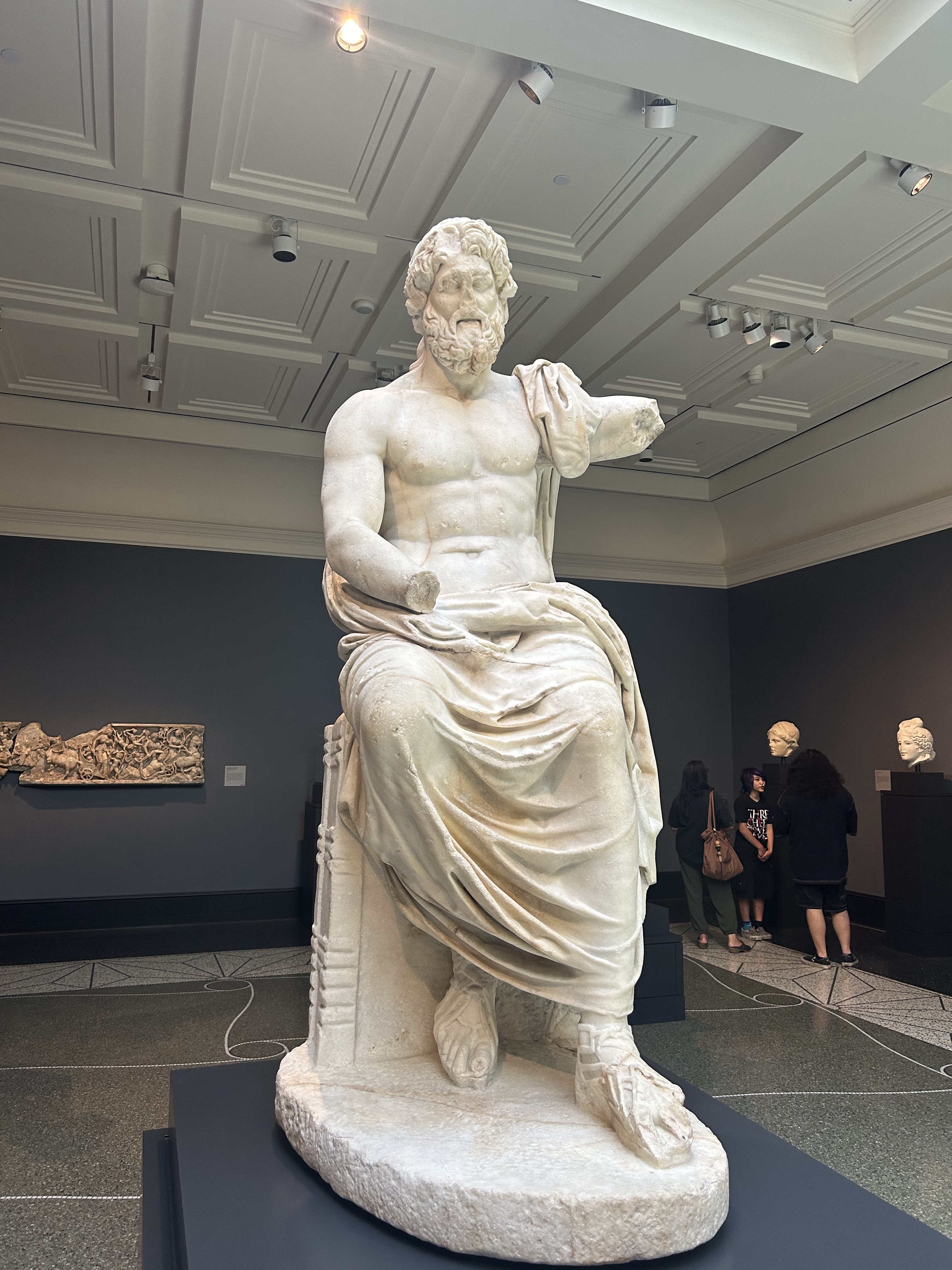
Nowadays we seem to hand out trophies for everything. Little league sports, academic achievements, spending lots of money on food, all get trophies. And trophies can be impressive. They can be large and bedazzled and shiny. They can earn you lots of fame. I think of trophies people spend their whole lives trying to achieve like the Lombardi Trophy (the Super Bowl trophy has a name, who knew?). Or I think of academic trophies that parents place on their bookshelves at home.
But I also can’t help but think of where trophies often end up. Having played lots of sports as kids, my brother and I earned several trophies (not to brag because most were participatory). Where are they now? Well, collecting dust in a box in the basement. They were up on a shelf for a while, but eventually they took up too much space. We made room for other things and those trophies got shoved to the basement.
And as much value we may place on trophies today – even big, life-time achievement trophies – they often end up in a box or a case, not given much thought on the day-to-day. They collect dust. They get in the way. Eventually they’re forgotten.
Sometimes we treat God the same way. And that’s certainly how they treated Him in 1 Samuel 4.
The Teams
1 Samuel 4 takes place before Israel has a king. During this time, Israel was to have God as their King, following the rules He had given. But already, Israel kind of stunk at this. They were told by God to drive out neighboring tribes in the land God had promised them (Numbers 33:50-56). Shockingly, they didn’t do this (Judges 1:28). The Philistines were one of those tribes.
Now we come to the battle scene in 1 Samuel 4. Let’s take a look at both teams.
On one side we have the Philistines. In those classic sports movies, these would be portrayed as the big, bad bullies. The ones who don’t let girls on their team and always push the kid with glasses. The Philistines were an ancient tribe that was constantly at odds with Israel. They worshiped several gods like the other tribes during that time. One of the main gods they worshiped was Dagon, an interesting half-fish half-man combo.
On the other side, coming in at twelve tribes, is Israel. As mentioned before, Israel does not yet have a king, and it is not going too well (read the entire book of Judges). Despite God constantly reaching out, the Israelites figured they were better doing their own thing. They still had their rituals, the temple, and the festivals. But the day-by-day looked like doing “whatever was right in their own eyes” (Judges 21:25). Now, let’s see how this battle turns out.
Now the Israelites went out to fight against the Philistines. The Israelites camped at Ebenezer, and the Philistines at Aphek. The Philistines deployed their forces to meet Israel, and as the battle spread, Israel was defeated by the Philistines, who killed about four thousand of them on the battlefield. (1 Samuel 4:1-2)
Yikes. As you can see, the Israelites lost pretty badly. But they didn’t give up yet!
The Strategies
Like any good sports team after a bad loss, the Israelites evaluated their strategy.
And when the people came to the camp, the elders of Israel said, “Why has the Lord defeated us today before the Philistines? Let us bring the ark of the covenant of the Lord here from Shiloh, that it may come among us and save us from the power of our enemies.” (1 Samuel 4:3)
See, this time they would have the ark of the covenant. Now what is that? The ark of the covenant was a large, ornate box that housed the Ten Commandments and a jar of manna (Exodus 25:16, 16:33), both representations of God’s faithfulness and provision. The ark was kept in the inner part of the sanctuary because it is incredibly holy. On its lid, God’s presence rested and here He spoke to Moses face-to-face (Numbers 7:89). So when the Israelites decided to take the ark of the covenant with them, it was them deciding to take God’s presence with them. A great plan, right?
Now for the strategy of the Philistines. Although not explicitly stated in this Bible passage, the war strategy of the Philistines would probably look something like we see in 1 Kings 18:25-28 and every other pagan ritual. They probably sacrificed and cried out to their god to help them win in battle. For them, their god was key to victory and blessing. They needed his attention. Large displays of sacrifice was how they got it.
The Losers
So the people sent men to Shiloh, and they brought back the ark of the covenant of the Lord Almighty, who is enthroned between the cherubim. And Eli’s two sons, Hophni and Phinehas, were there with the ark of the covenant of God… So the Philistines fought, and the Israelites were defeated and every man fled to his tent. The slaughter was very great; Israel lost thirty thousand foot soldiers. The ark of God was captured, and Eli’s two sons, Hophni and Phinehas, died. (1 Samuel 4:4,10-11)
Wait a minute, Israel lost? But they brought God with them into the battle. How could they lose?
The same reason the Philistines lost. Let’s keep reading.
Then the Philistines took the ark of God and brought it into the house of Dagon and set it up beside Dagon. And when the people of Ashdod rose early the next day, behold, Dagon had fallen face downward on the ground before the ark of the LORD. So they took Dagon and put him back in his place. But when they rose early on the next morning, behold, Dagon had fallen face downward on the ground before the ark of the LORD, and the head of Dagon and both his hands were lying cut off on the threshold. Only the trunk of Dagon was left to him…The hand of the LORD was heavy against the people of Ashdod, and he terrified and afflicted them with tumors, both Ashdod and its territory. (1 Samuel 5:2-4, 6)
The Philistines may have won the battle, but they definitely lost the war. To the Philistines, their sacrifices and rituals had worked. They won! They defeated the God of Israel. Here, they viewed God as another trophy to display their god’s ability to destroy their enemies. They put the ark of the covenant beside their god Dagon, revealing they saw no difference between the idol and the Creator God.
The Israelites viewed God the same way. Just as the Philistines used their rituals to earn their gods favor and victory, the Israelites took the ark of the covenant as a way to draw God’s attention. They wanted a victory so now they’d go to God. But just like any other trophy, once they won, He would go back on the shelf.
How often do we do the same? We seek God during hard times or when we need a promotion or a relationship. Then, when we go back to “normal” life, we let Him collect dust in the basement of our hearts. This may be as obvious as never reading the Bible or praying unless you want something, or it may be as hidden as carrying on the routine of church and Bible study, but never stopping to truly connect with God.
But aren’t our rituals enough? Isn’t the fact that we seek Him for victory good enough? Why does God need more than that? Well, He doesn’t need it. He wants more of us.
The Victorious One
One aspect of the ark of the covenant I didn’t go deeper into was the lid. This lid was known as the mercy seat. Every year, the high priest entered where the ark was kept and sprinkled the blood of sacrificed animals on this lid, representing the atonement of –or the making amends for – the sins of Israel (Leviticus 16). What does that have to do with mercy? Every sin is deserving of death (Romans 6:23), and totally separates us from God’s presence. But God, being rich in mercy, allowed Israel to sacrifice animals so they could have a relationship with Him and the joy of His love.
Look at Hosea 6:4-6.
What shall I do with you, O Ephraim? What shall I do with you, O Judah? Your love is like a morning cloud like the dew that goes early away. Therefore I have hewn them by the prophets; I have slain them by the words of my mouth and my judgment goes forth as the light. For I desire steadfast love and not sacrifice, the knowledge of God rather than burnt offerings.
Ephraim and Judah are tribes of Israel. Here God, through the prophet Hosea, is pointing out how the Israelites love and treasure God one moment and then forget him the next like the temporary morning dew – or like a trophy quickly packed away. God then says that He hewed – cut and shaped – them through His prophets because He desires their love. He wants their hearts, not their rituals or sacrifices.
What Israel got wrong is not that they wanted to bring God with them but that they only wanted to give God some of themselves. They were willing to bring “burnt offerings” and “sacrifices,” they were willing to do the labor of carrying the ark, but they weren’t willing to give God their hearts or the time to truly know Him. They treated God as a trophy to put in a box rather than a treasure to live for. They focused on the victory they desired and not the Victorious One.
But God didn’t leave them there. We see that He brought the ark of the covenant, the way for Israel to receive mercy, back to them (1 Samuel 6:1-15). He made a way to bring the ark back to the Israelites. And He sent an even greater Mercy Seat. The mercy seat of the ark was a foreshadowing of the great mercy God would show us through His Son Jesus Christ. Jesus offers the free gift of eternal atonement through His sacrifice of great, undeserved love. Even better, He offers to give us new hearts to love God and new eyes to focus on Him (Ezekiel 36:26). Jesus offers an abundantly loving relationship with Him and the Father. And isn’t that worth so much more than any trophy?

 Overwhelmed